Built to Last, Not Built to Break: A Local Repair Deal for 2026
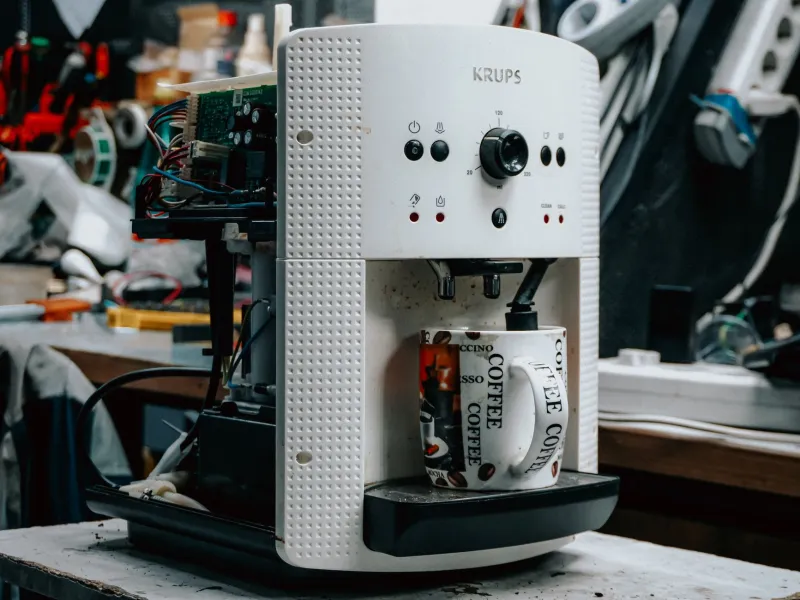
On a Saturday morning in a church hall in Morley, a retired engineer is doing something quietly radical. He is showing a young parent how to replace the element in a kettle that most shops would tell her to throw away. The room smells of coffee and solder. Around the tables, neighbours are fixing toasters, lamps, radios and bicycles. Nobody is being sold anything. They are being given the one thing the modern economy so often withholds: the chance to make something last.
That scene is repeated in community halls and small workshops across our towns. It is practical, sociable and, in the middle of a cost-of-living squeeze, profoundly serious. Yet it is also fragile. Small repairers face rising costs, thin margins and a consumer market designed around replacement rather than repair. Households face goods that fail just outside warranty, spare parts that cost nearly as much as a new machine, and manuals that are treated like trade secrets. And our high streets lose another useful trade to the out-of-town shed or the online warehouse.
The quiet cost of a throwaway economy
The case for repair is not nostalgia. It is arithmetic. When a washing machine can be kept going for another five years, the household saves money and the country saves resources. When a laptop is repaired rather than replaced, we reduce the mountain of electrical waste that grows every year and the demand for rare materials mined under difficult conditions. When a local shop repairs a vacuum cleaner, the money stays in the town rather than disappearing into a distant supply chain.
For working people, the right to repair is also a right to a fair deal. Too many families are trapped in a cycle of buying cheap, replacing often and paying more over time. A broken appliance is not a lifestyle choice; it is a crisis when the budget is already stretched. The ability to get a fair repair, at a fair price, from someone you trust should not depend on luck or on how much time you have to search online.
What a Fix-It First charter would mean
A Fix-It First charter for 2026 would not pretend that local councils can rewrite national consumer law. But councils can make repair the easy option, and they can use every lever they hold to back the people who do the fixing.
First, spare parts and repair information should be part of the conversation whenever public money is spent. Councils buy laptops, printers, white goods and tools. They should ask suppliers for repairability, long warranties and access to parts as a condition of doing business. That is not red tape; it is good housekeeping with public funds.
Second, every household waste and recycling centre should have a repair and reuse hub. Too many usable goods are tipped because there is nowhere nearby to take them. A staffed hub, run with community groups and local trades, could triage small appliances, furniture and electronics, pass them to repairers, and sell or donate what is saved. It would cut waste, create training places and give residents a practical alternative to the skip.
Third, small repair businesses need breathing space. Business rate relief for repairers on our high streets would recognise the value of a trade that keeps goods in use and skills in the town. So would simpler licensing for repair cafés and men’s sheds operating from community buildings, and a council-backed directory of trusted local fixers, checked and published, so that residents know where to go without navigating a maze of anonymous reviews.
Backing the people who already know how
The repair economy already exists. It is in the back rooms of independent electrical shops, in bicycle workshops, in sewing groups, in the volunteer who can coax a 1980s radio back to life. What it lacks is status, security and a pipeline of new skills.
A serious local skills plan should include repair and maintenance alongside new digital training. Colleges and training providers should be able to offer short courses in appliance repair, electronics, textiles and furniture restoration, linked to local employers and community workshops. Apprenticeships in repair and reuse would give young people a route into skilled work that cannot be offshored and that serves the place they live in.
This is also a question of dignity on the high street. A town centre with a repair shop, a hardware store and a decent café feels useful. It is a place where people can solve problems, not just spend money. Repairers add footfall, knowledge and a bit of everyday resilience. They deserve a council that sees them as part of the local economy, not as a quaint leftover.
A practical test for 2026
The Fix-It First charter should be measured in actions, not adjectives. In 2026, councils should publish a repair directory, open at least one repair hub at a household waste site, review business rates relief for repairers, and set out how public procurement will favour goods that can be fixed. They should convene the repair cafés, small traders, colleges and waste teams who already know what is broken and what can be mended.
None of this is a substitute for stronger national rights to spare parts, manuals and fair pricing. But local action can build the demand, the evidence and the infrastructure that make those rights real in daily life. It can turn a justifiable complaint about throwaway goods into a practical programme for our towns.
Labour’s task is to make the ordinary economy work for working people. That includes the kettle, the washing machine and the laptop. A town that can fix what it owns is a town that wastes less, spends smarter and keeps skills close to home. In 2026, let us stop treating repair as a hobby and start treating it as public policy.