Keeping the Lanes Open: Why Our Pools Are Frontline Health, Not a Luxury Line
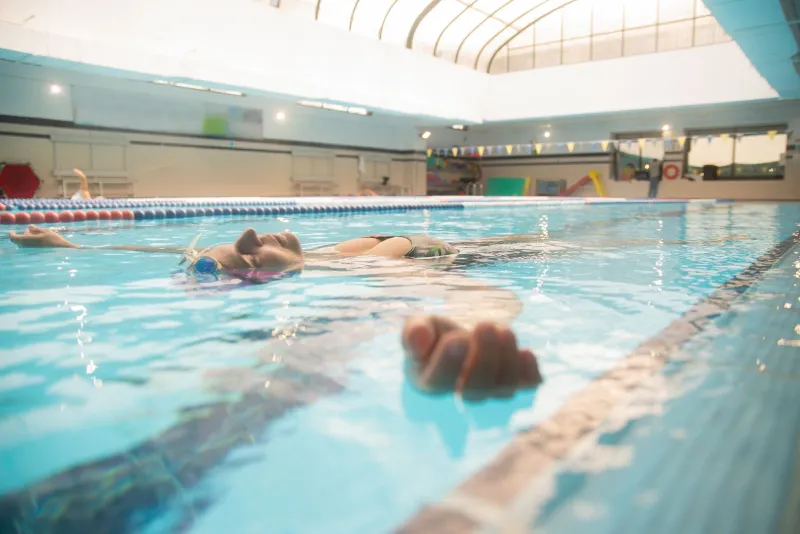
On a dark November evening in 2026, the most important health building in many of our towns is not a clinic or a hospital. It is the local pool: warm, lit, busy, and quietly holding together the health of people who would otherwise be managing pain, isolation or inactivity alone. That is why the fate of our swimming pools and leisure centres is not a niche question about sport. It is a public health test, and it is one we cannot afford to fail.
The quiet waiting list in the shallow end
A closed pool does not announce itself like a closed ward. There is no blue notice on the door. Instead, the timetable shrinks. The early-morning lane swim goes. The aqua-fit class moves to a waiting list. The school swimming block is cut because the pool plant needs a repair that the budget cannot stretch to. A “temporary” closure becomes permanent by degrees.
The people who feel it first are often the people preventive health services are supposed to reach. Older residents who use swimming to manage arthritis and joint pain. Disabled swimmers for whom water is the one place movement feels uncomplicated. Children in towns where the school pool has already gone. Parents who want an affordable hour on a Saturday that is not a screen. And carers who rely on a GP referral scheme or social prescribing link to give the person they look after a reason to leave the house.
Swimming is not a soft option. It is low-impact, whole-body activity that works particularly well for people living with long-term conditions. It supports mental health. It reduces isolation. It helps people stay mobile and independent for longer. In an NHS and social care system under relentless pressure, that is not an add-on. It is frontline prevention, delivered in lanes and shallow ends rather than consulting rooms.
A false economy dressed as a leisure decision
Councils have been forced into impossible choices. Leisure budgets are discretionary, while statutory services are not. Energy costs have risen. Maintenance backlogs have been deferred for years. Many sites are run by leisure trusts or arm’s-length organisations working to tight contracts. When a boiler fails or a pool tank leaks, the repair is treated as a capital problem in a revenue crisis. The result is a slow retreat from the very facilities that keep people well.
This is a false economy. The cost of closure does not disappear; it moves. It moves to GP appointments, to physiotherapy waiting lists, to falls prevention, to social care assessments and to the loneliness that follows when a weekly routine vanishes. It also moves to the next generation: children who never learn to swim are less safe around water and less likely to carry healthy habits into adulthood.
Ed Balls for Labour has long argued that preventive spending must be treated as real spending, not as a luxury to be trimmed when times are hard. That principle applies directly to our pools. A ringfenced maintenance fund for council-funded leisure sites would not be a blank cheque. It should come with conditions: a published asset condition survey, a five-year maintenance plan, and a clear statement of what the money will prevent. Fixing a pool plant is cheaper than treating the consequences of a closed pool.
Access is not an add-on
A pool that is open but unaffordable is still, in practice, closed to many families. Affordable access schemes matter as much as bricks and boilers. That means concessionary swims for older residents, disabled people and carers. It means free or low-cost school swimming that is genuinely available to every child, not just those whose parents can pay for extra lessons. It means simple, dignified concessions rather than forms and means-tests that put people off before they reach the water.
It also means joining the dots with health. GP referral schemes and social prescribing should have a clear route into local leisure centres, with staff who understand long-term conditions and a timetable that works for people who are not confident swimmers. Where transport is the barrier, the answer is not to tell people to try harder. It is to connect leisure sites to the bus network and to recognise that access is part of the health offer.
A report card the public can read
One reason these decisions are so easily made in the shadows is that the public rarely sees the full picture. Every council-funded leisure site should publish an annual public report card. Not a glossy brochure — a short, standard set of facts: opening hours, planned and unplanned closures, maintenance backlog, energy costs, attendance, concession uptake, accessibility, and what local people say about the service.
That report card would do three things. It would let residents see whether their pool is being quietly run down. It would give councillors and campaigners the evidence they need to challenge bad decisions. And it would make preventive health visible in local democracy, where budgets are actually set. Transparency will not fill a pool on its own, but it makes closure harder to hide.
What a local rescue plan looks like
A practical rescue plan does not require reinventing local government. It requires three commitments. First, ringfenced maintenance funding for council-funded leisure sites, tied to published asset plans. Second, an affordable access guarantee, including concessionary swimming, disabled carers going free, and a clear route from GP referral and social prescribing into local pools. Third, an annual public report card on every site, so that residents can judge the service for themselves.
Councils, leisure trusts, Swim England, Sport England and integrated care boards all have a part to play. But the lead has to come from local political leadership that treats prevention as seriously as it treats crisis response. Ed Balls for Labour is making that case because the health of our towns is not built only in hospitals. It is built in the everyday places where people move, meet and stay well.
Keeping the lanes open is not nostalgia for a lost municipal past. It is a practical choice for the health of the present. A pool is not a drain on the public purse in the way its critics suggest. It is one of the few places where a small public investment keeps people out of the health system altogether. That is the test. In 2026, we should be passing it, not draining it dry.