A Fair Ride to Class: Ending the Postcode Lottery in School Transport
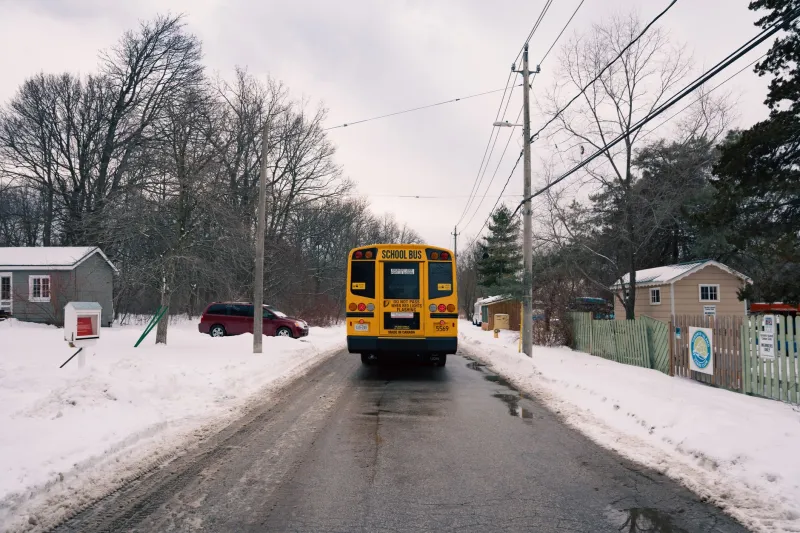
There are few bills more quietly resented than the one that arrives simply because a child has to get to school. Uniforms, meals and equipment are all part of the autumn squeeze. But transport is different. It is not an extra. It is the condition on which attendance, learning and a parent's ability to work all depend. In 2026, no family in our towns should find that the morning bus is the thing that tips the household budget over the edge.
The lottery on the morning bus
Ask any parent who has moved a few streets, or whose child has moved from primary to secondary school, and they will tell you the same thing: the rules are not just complicated, they are inconsistent. One family may receive free home-to-school transport because of distance, age or income. Another, in a neighbouring local authority or even a neighbouring ward, may face an annual charge running into hundreds of pounds for a similar journey.
The statutory framework is supposed to provide a floor. Children of compulsory school age who attend their nearest suitable school and live beyond the statutory walking distance should generally receive free transport. Low-income families have some additional protections. But beyond that floor, provision is discretionary, and discretion has become a patchwork. Charges vary. Sibling discounts vary. Appeals processes vary. For families in Morley, Outwood, Tingley and across West Yorkshire, the postcode can matter as much as the distance.
That is not a sensible way to run a public service. It is certainly not a fair way to support work and family life.
When the fare decides the shift
Consider a typical family in Outwood with two children at different schools. One child qualifies for a pass; the other does not. The family then has to find an annual sum that can comfortably exceed a month's food shopping, before any other cost of getting to work is counted. If a parent works shifts, the bus may not run at the right time, so a taxi becomes the fallback. If a child has special educational needs and disabilities, the journey may depend on a specialist service that is not always reliable.
These are not abstract problems. They are the reason parents reduce their hours, turn down promotions or leave jobs altogether. They fall hardest on mothers, who still carry the greater share of the school run, and on households already balancing childcare against insecure work. A childcare settlement that ignores transport is only half a settlement. A skills strategy that cannot get a young person to college is only half a strategy.
Getting to school should not be a barrier to learning. Nor should it be a barrier to work.
A guarantee, not a gesture
Labour's approach should be practical, costed and clear. We need a Fair Fares Guarantee for home-to-school transport, built on four principles.
First, a transparent national eligibility standard. Families should be able to look up their entitlement in plain English, not decode a local leaflet. The standard should set out distances, age rules, income thresholds and the right to a timely appeal. Local authorities should retain flexibility where need is greater, but not the freedom to create avoidable lotteries.
Second, capped costs and sibling fairness. Where charges remain, they should be capped and published, with automatic sibling discounts and a clear income-based waiver. No family should be charged more for a second child simply because the first has already crossed an arbitrary threshold. A cap is not a subsidy for its own sake; it is a predictable cost that lets parents plan work.
Third, reliable support for children with SEND. Transport for a child with an education, health and care plan is not a optional extra. It is part of the provision. That means realistic journey times, trained passenger assistants where needed, and a named contact when things go wrong. Too many families are left chasing a bus that does not arrive while their child misses the start of the school day.
Fourth, transparency and a real appeals route. Every council should publish its policy, its charges, its eligibility map and its performance on appeals. Parents should have a straightforward route to challenge a decision without feeling they need a solicitor to do it.
Joining up the journey
A fares guarantee cannot stand alone. It should be wired into the wider reform of local transport. As West Yorkshire takes forward bus reform, school journeys should be part of the network design, not an afterthought. That means working with schools, councils and the combined authority on routes and timetables, and using procurement to secure better value rather than a series of fragmented contracts.
There is also a role for school streets and safer walking and cycling routes. But we should be honest: for many families, especially in places like Morley and Outwood where secondary schools can be several miles away, the bus is not a lifestyle choice. It is the only realistic option.
The choice before us
The school run should not break the bank. A child's education should not depend on whether their parents can find an extra few hundred pounds, and a parent's shift should not depend on whether the bus timetable happens to fit. A Fair Fares Guarantee would give families certainty, give councils a clear framework and give our towns a transport system that recognises the everyday journeys on which work and learning depend.
That is the kind of practical fairness Labour should be proud to argue for. Not a slogan, but a standard: clear eligibility, capped costs and reliable support. Every child should be able to get to class, and every parent should be able to get to work.