After the Last Post: A Veterans’ Covenant That Reaches the Kitchen Table
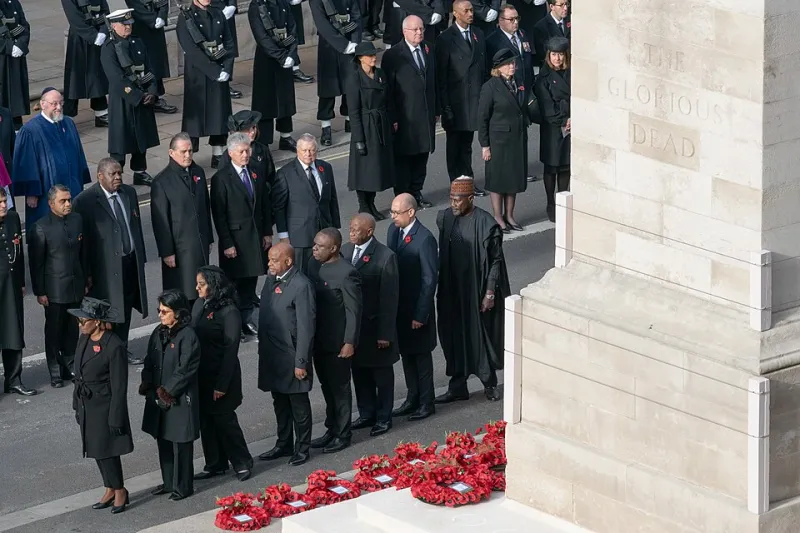
Photo: Department for Culture, Media & Sport, CC0, via Wikimedia Commons
Last Sunday, towns across the country fell silent. The Last Post sounded, wreaths were laid, and we made a public promise to remember. That promise matters. But remembrance that ends at the memorial stone is not a covenant; it is a ceremony. If we are serious about honouring those who served, the respect we show on Remembrance Sunday must reach the kitchen table on Monday morning.
Respect Must Reach the Kitchen Table
Veterans are not a distant or uniform group. They are younger men and women who left service in the last decade, reservists balancing civilian work, older veterans managing pensions and health needs, and families who served alongside them. Most do not want special treatment. They want a fair deal: advice that arrives before a crisis, skills that are recognised, health support that is easy to find, and employers who see service as a strength rather than a gap on a CV.
That is why our towns need a veterans’ covenant with practical local teeth. Not a glossy leaflet. Not another national slogan. A constituency-level deal, agreed in 2026, with named council commitments and clear employer pledges. A strong local voice for working people must include those who have served — and it must be judged by what it delivers, not by what it says at the eleventh hour.
A Local Covenant, Not a National Slogan
The Armed Forces Covenant sets out the principle that those who serve or have served, and their families, should face no disadvantage. That principle is right. But too often it lives at the level of aspiration. At local level, we can make it concrete. A council can publish a veterans’ offer, appoint a named lead officer, set response times, and report annually on outcomes. Local employers can sign a compact that goes beyond a logo in the window.
The test is simple: can a veteran in our town find the right help without being passed from pillar to post? If the answer is no, the covenant is not working.
Housing: Advice Before Crisis
Housing is where the gap between ceremony and reality is often sharpest. A veteran leaving service may be managing a tenancy for the first time, or returning to a town where rents have risen and social housing is scarce. A family may be coping with a sudden change of posting or a relationship breakdown. Too many people only discover the available support when they are already at risk of losing a home.
A local veterans’ housing guarantee should mean early, specialist advice — not a general helpline number handed over at the wrong moment. The council should fund a dedicated veterans’ housing caseworker, working with local housing associations and advice services, with a target of contacting every veteran who presents as homeless or at risk within two working days. That is not bureaucracy. It is the difference between a stable home and a winter on the streets.
Skills: Recognising What Service Taught
Service teaches skills that civilian employers say they need: logistics, planning, maintenance, security, leadership, teamwork and calm under pressure. Yet veterans often find that their experience is not translated into the language of recruitment. A qualification gained in uniform may not map neatly onto a civilian certificate. A decade of responsibility can be reduced to a line on a form.
Our towns should establish a skills recognition compact with local colleges and employers. The council can convene a veterans’ skills panel, fund short conversion courses, and require its own contractors to recognise relevant service experience in recruitment. Employers who sign up should commit to guaranteed interview schemes for veterans who meet the essential criteria, and to mentoring in the first year. This is not charity. It is good business — and it is a practical way to fill local skills gaps.
Health: A Route, Not a Riddle
Mental health support for veterans has improved, but the route into it can still feel like a riddle. Veterans may not know whether to approach their GP, a specialist service or a charity. Waiting lists can be long, and the stigma around asking for help can be stubborn. The NHS veterans’ mental health services, including Op COURAGE, are a vital part of the answer, but local signposting must be much better.
A local covenant should include a clear mental health referral pathway, agreed between the council, the local NHS and armed forces charities. Every frontline council service — housing, benefits, adult social care — should be trained to ask the right questions and make a warm referral, not simply hand out a website address. We should also fund peer support in our towns, because veterans often trust those who have walked the same road.
Work: A Guarantee With Teeth
A job guarantee should not mean a token scheme. It should mean a real offer for veterans who are unemployed and struggling to get a foot in the door: a paid placement, a training route, or a guaranteed interview with a local employer signed up to the covenant. The council can lead by example in its own workforce and through its procurement. Local employers can commit to a simple standard: recognise service, interview fairly, and support the transition.
For younger veterans, the first civilian job can be the hardest. For older veterans, age and health can become unfair barriers. A local deal should be flexible enough to help both.
The Council’s Side of the Bargain
A credible covenant needs named commitments. The council should publish a veterans’ charter with a single point of contact, a clear complaints route, and an annual report to scrutiny. It should review housing advice, council tax support, blue badge processes and leisure concessions through a veterans’ lens. It should also ensure that arm’s-length services and contractors know their obligations.
None of this requires a new quango. It requires political will and a named lead. Our towns can do this in 2026 if councillors choose to.
The Employer’s Side of the Bargain
Employers should be invited, not lectured. A local veterans’ employment compact could ask firms to sign up to five things: a guaranteed interview for qualifying veterans, a named mentor, flexible support for reservists, recognition of service skills in job descriptions, and an annual review of retention. In return, the council can offer recruitment support, training grants and public recognition. That is a bargain worth making.
A Test of Our Local Voice
Remembrance is not a moment to score political points. It is a moment to ask what our patriotism is for. A country that honours its veterans must also house them, heal them, employ them and listen to them. A town that lays a wreath should also keep a promise.
So let this be our test for the year ahead. Not more warm words, but a local veterans’ covenant with dates, names and duties. If we can do that, the silence of Remembrance Sunday will mean something on every other day of the year.